Social equality between men and women

The social equality between men and women has long been discussed and promoted ever since human civilization stepped into the 21st century featuring increasing modernization and democracy than ever before. Nevertheless, in China, this equality is being popularized among the public and spread among social consensus, but with much higher difficulties and more challenges that have to be faced than most other countries in the world.

As one of the several countries around the globe enjoying time span of civilization of over 1000 years, Chinese people have long been instilled with the cognition that males and females are so different that they are almost mutually excluded into different categories in terms of social status such as functional characteristics in families and acceptability in career selections. One thing that has to be made clear is that it has been deeply rooted in Chinese people’s mind that giving birth to a boy is much better than to a girl and this notion still remains in this modern world where freedom is in the first place of measuring human rights. The truth is many parents pay more attention to their male offspring, leaving not too much space for female ones. Once girls grow up and get married with the ones they love, their husbands may treat them as being responsible for bearing and educating their children, rather than playing the role of supporting families financially. In career development, women are normally much more disadvantaged once they reach certain age levels, and due to the difference between physical structures, they are usually restricted to engaging in specific roles in the society.

On the other hand, despite the fact that potential discrimination against women still exists, there appears other unique and rather surprising biased notions against men. What is worth noticing is that, when it comes to being strong and hard-core, it usually refers to men rather than women, rendering many males having to pretend to be strong even if they are not and their social responsibility keeps rising as women try to get more from the balance between genders. Another example is that in treating legal conflicts, women are always categorized as the disadvantaged groups, making the males play the dominant role to do harm to others when actually they are the ones being harmed.

To sum up, only when a balance between pursuing social equality is found can human, regardless or their genders, really benefit from being equal.

Zixuan Cheng

Human Trafficking in Asia

Human Trafficking in Asia

Ma Yuge

Behind the economic success of developing countries in Asia lurks many unresolved social issues. One of the most serious social issues facing the world today is human trafficking, particularly that entailing force labor and sexual abuse. This is probably the most terrible of all human rights violations. Human trafficking knows no limits in terms of age and gender, and victims are often from low-income or otherwise helpless families.

Unfortunately, some cases of human trafficking appear to be taken for granted because of the extreme difficulty in addressing the problem and punishing the culprits. And whenever victims are rescued by the authorities, the cause is usually assigned to financial problems. Here the sad reality is that some are directly given to human traffickers by their guardians in exchange for money. As a result, they end up completely destroyed both physically and psychologically, having lost their confidence and self-worth and thus becoming hopeless. This is why many victims have difficulty getting back to a normal life.

There are also victims who are relegated to a life of slave labor and no pay. Most such victims also come from poor families in rural areas, but they generally start wishing to earn a lot of money to support their families, thereby taking the risk to work away from their home and even in a foreign country. Here a lack of education and awareness plays a role. Because many cannot evaluate the risks appropriately as a result of their lack of education and understanding, they may jump at an “opportunity” that often turns out to be a trap. And many times young people are lured into forced labor because of naive expectations, leading to child labor in many poor countries in Asia. Because they lack voice, they are likely to be the worst victims of human trafficking and become handicapped.

It is certainly alarming how human trafficking has become such a serious problem in society today, affecting people of all ages and backgrounds. Human trafficking is a critical social issue in Asia, and the weight of its consequences must be borne by not only the victims but also the rest of society as well. Although much effort is being made to address this issue, more is clearly needed.

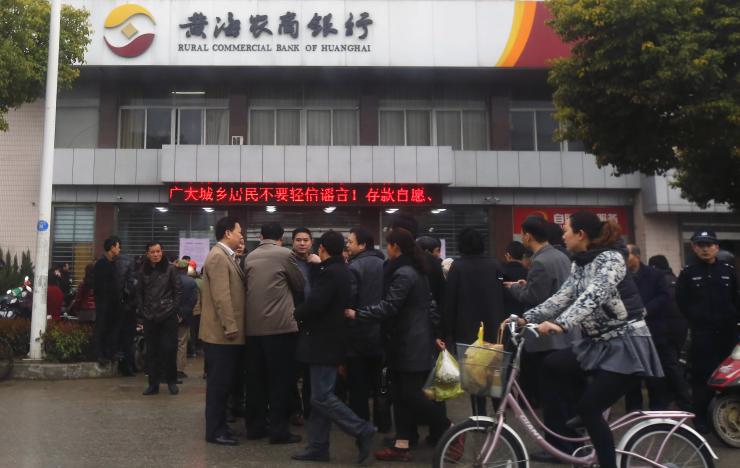
民商银行

为了更好地为社会提供融资渠道,2014年两会期间,银监会主席尚福林首次宣布民商银行试点消息。一年之后,两会期间,由国务院总理李克强在政府报告中表示,要“推动具备条件的民间资本依法设立中小型银行等金融机构,成熟一家,批准一家,不设限额”。

如今,已有三家以上的温州民商银行获得批准。民商银行设立的目的是为了更好的服务社会融资。相比大型的国有银行企业,民商银行主要的服务对象是中小企业,小微企业,工商个体户和小区居民、县域三农提供普惠金融服务。通过提供更低贷款利率和缩短贷款审批时限的方法来为实体经济发展提供高效和差异化的金融服务。

浙江银监局公告显示,温州民商银行的经营范围为:吸收人民币存款;发放短期、中期和长期人民币贷款;办理国内结算;办理票据承兑与贴现;发行金融债券;代理发行、代理兑付、承销政府债券;买卖政府债券、金融债券;从事同业拆借;从事银行卡业务;提供信用证服务及担保;代理收付款项及代理保险业务;提供保管箱服务;经国务院银行业监督管理机构批准的其他业务。


china-rural-banking

https://www.google.com.ph/search?q=Civil+and+Commercial+Bank+pilot+message+in+china&es_sm=93&source=lnms&tbm=isch&sa=X&ved=0CAgQ_AUoAmoVChMIoZbb4NHhxgIV0gWSCh2sXg_p&biw=1366&bih=623#tbm=isch&q=Civil+and+Commercial+Bank+in+china&imgrc=ZQAcmWLzmuKAiM%3A

Aging Populations

The world is ageing slowly and as we look around us we see a population of 65 and above on the rise around us, especially in developing countries and it won’t be long before the developed countries too catch up on this feature. Ageing population is where the proportion of older people is high within the total population. As the number steadily increases, the world is expected to see a rise in people above the age group of 65 and more, accelerating the numbers old people in the society. As the world sees a rise in the ageing population the responsible to make them live in the society with dignity and security is also a challenge to all the countries.
The ageing population is expected to be more than children between 0 -14 years in the next five years. Women outlive men most of the times but this gender gap is expected to decrease in the developed countries and increase in developing countries. Ageing affects all types of societies; the rich and the poor in different ways. The global life expectancy have been on the rise because of improved hygiene, better communication, healthy diets, socioeconomic development, and advancement of science and technology. Though there are a lot of problems due to the ageing population in the society, it can also be looked at as a success in the history of mankind.

A lot of changes need to be incorporated into the existing society to make living comfortable for this ageing population. And there is a need to change a lot of social reforms in the society to fit in these older persons. They need to be kept in the labor markets for a longer period of time and the retirement age should be increased. Good healthcare will also prevent diseases connected with old age. Special attention needs to be given to their basic needs like housing, health, social services, and pension schemes which can make them lead healthy and comfortable lives.

L.K. Lee

Prediction of Bank Customer Telemarketing Success Using Data Mining Models

Abstract
Telemarketing has become a popular marketing tool. In a financial crisis, credit may contract in domestic and international markets, forcing banks to turn to customer deposits, including term deposits, as a source of additional funds. In addition, loans are a main source of income for banks. Therefore, a bank manager’s key responsibility is to attract term deposits and generate loans. Here direct marketing enables banks to reach customers who are likely to make deposits and take loans, so identifying such customer groups is a major challenge for banks. Using the proposed model, a bank manager can better conduct direct marketing campaigns and achieve greater customer satisfaction. A machine learning model is built to predict the success rate of bank telemarketing in identifying valued customers. This work describes a data mining approach to extracting valuable information from a dataset from a recent Portuguese bank telemarketing campaign obtained from the UCI KDD Machine Learning Datasets. To validate prediction accuracy, the proposed model is compared with popular classification models including Naïve Bayes, SVM and Decision Tree. All experiments are implemented in WEKA. The experimental results provide useful insights for strengthening banks both financially and functionally.

Yuejun Sun, Xinru Cheng, Haiming Li, Yuwen Lin, Joohwan Sung, Anlan Wang

The Thief of Joy: The Heavy Toll of Constant Comparison

The Thief of Joy: The Heavy Toll of Constant Comparison

In the past, our world was small enough that we only measured our lives against our neighbors, our cousins, or the person sitting in the next desk over. Today, that world has expanded into a global, digital theater that never goes dark. Because of the screens in our pockets, we are in a state of continuous, inescapable comparison with billions of people. We no longer just see the “best” of our local community; we see the most polished, edited, and hyper-successful moments of the entire human race. This isn’t just a minor annoyance of the digital age—it is a profound shift that is quietly reshaping how we value ourselves and our place in the world.

The real danger lies in how easily comparison distorts our sense of reality. When a student scrolls through a feed filled with classmates winning awards or traveling the world, their own quiet progress starts to feel like stagnation. A young professional, doing perfectly well by any objective standard, can feel like a failure when surrounded by content featuring luxury apartments and rapid-fire promotions. We have begun to measure our “behind-the-scenes” footage—the messy, unedited parts of daily life—against everyone else’s highlight reels. In doing so, we lose sight of our own growth, trading personal satisfaction for a race that has no finish line.

Social media acts as a powerful amplifier for this problem because it demands a performance. Most of us don’t post about our lonely Friday nights, our insecurities, or the projects we failed at. We post the celebrations. Over time, this creates a filtered reality where everyone else looks more accomplished and beautiful than they truly are. Even when we know this intellectually, the emotional weight remains heavy. Constant exposure to these idealized images breeds a quiet, persistent envy, making us feel that our ordinary, human lives are somehow “less than” because they aren’t constantly being applauded.

For young people, whose identities are still under construction, this pressure can be paralyzing. During a time of life when belonging and self-worth are already fragile, being judged against a global standard of perfection can lead to a crushing sense of inadequacy. Many begin to believe that they are only valuable if they are exceptional or visible. This environment doesn’t just hurt the individual; it erodes our communities. When we see our peers as rivals to beat rather than companions to walk with, our relationships become competitive and shallow. We end up in a society where everyone is trying to be seen, yet very few people feel truly known.

Ultimately, we need to redefine what a successful life actually looks like. Real growth is often slow, private, and deeply uneven—it rarely makes for a viral post. The most important parts of the human experience, like resilience, kindness, and finding a sense of purpose, are often invisible to a camera lens. To heal, we have to stop looking outward for validation and start looking inward for meaning. If we want to build healthier lives, we must create spaces where we are free to be ordinary, to be messy, and to grow at our own pace, without feeling the need to turn every moment of our existence into a competition.

HAODE (YUKI) CHEN

说“任性”

武钢三中高二  吴云婵


暮霭沉沉楚天阔,江上微波动,浊流暗涡回。一苇轻舟,摇摇晃晃。舟上人,昏昏欲眠。

舟上人便是我,时空记者零零八。

之所以来此,其中颇有因由。近来报社的邮箱里满是触目的标题《现代人何以如此任性!?》,不吝成排感叹号。总编很烦躁,下属很无奈。此番不辞劳苦跨越千年,便是来向楚地曾最任性的先贤——屈原先生取经。

可那沉吟泽畔的三闾大夫今儿个竟迟到了,小生我好生惆怅也!聊翻来前所作采访笔记,不觉喟叹连连。其书曰如下,读者姑且与我打发些等待时光。


一、女孩儿

(为响应国家二胎政策,女孩父母努力一年终得一子。恰欣喜若狂欲奔走相告之际,孰料女孩一哭二闹三上吊,出走割腕又咆哮。噫嘻!痛哉!哀哉!其母不欲且得且失,遂终止妊娠换女平安。而思弃子,岂止涕泪涟涟乎?始觉鱼与熊掌难兼得也,然果不可得兼耶?)

女孩口述因由:“他们爱我十三年了!他们的爱都是我的,那孩子凭什么和我抢!我就是要闹,他们不依我就是不爱我,那我离家出走岂不是理所应当的吗?”

录后有旁批:此之谓恃宠而任性也。而今父母,慎戒之。需授子分享容忍为何物。如斯人爱子,虽曰爱之,实则害之,其何胸襟入社会也!


二、开张公司

(武汉某公司开张,购得糖果数吨,别出心裁,铺就“糖果之路”,如花暄妍,占尽风光,揽客无数。然因后虑不周,一场春日好雨,付却此路于泥尘滂沱。诚可谓,原来姹紫嫣红开遍,似这般都付与垃圾山海,细语蚊蝇。)

公司将我堂堂记着推搡出门,气甚倨傲,拒绝采访,拒绝反省。

旁批:此世之所谓“有钱任性”者也。此任性,以有陶朱家底为基础,炒作为目的,考虑不周为借口,浪费为后果。虽腰缠万贯,可以罔度乎?揽客岂用挥霍为?一方口碑,足矣。


合上笔记,恰逢屈原先生负手而来,长身玉立,广袖蕙香。我泛舟相近,单刀直入:

“某素闻先生任性之名。敢问先生,为何任性?”

“宁昂昂若千里之驹乎?欲泛泛若水中之凫乎?吾闻浴后振衣,沐发弹冠。不愿与流俗浊世相亲而已。”这回答倒与史书不差分毫。我亦从善如流:“沧浪之水清可濯缨,浊可濯足。某闻道‘木秀于林,风必摧之’,先生不容世,世亦不容先生,极尽欺压之能事。即便先生身死,后亦抚掌而快,方如此,先生乃要任性到底吗?”

这话问得尖刻了些。他沉吟良久:“吾向吾道,以身力行,九死不悔,是为周虑。方今之时,我楚满室盈蠹,大梁将倾。任性死谏,或可以我之身死,化大吕黄钟,振聋发聩,警醒世人。如子超然,虽可逍遥世外,终亡国贱俘,为世所弃,朝不虑夕。”

他怅望江口,潮平远水宽,天阔孤帆瘦。“吾闻汝自后世而来,且听一言。吾虽任性,然非不计后果,不顾旁人,不听谏言者。任性倘使失了反省、失了周虑,纵逞得一时之快,则难免遗臭。”

“天下熙熙,皆为利趋;天下攘攘,皆为利往。尘虑萦心,任性何益?祸国殃民。有先生者,目光长远,考虑周全,可见确为时时自问,朝朝自省者也,任性错了目标,则焉可长远?任性失了周全,则谬误百端。有些任性,旁无人指摘,则一错千里。如先生死谏者, 又有几人?某今闻道,拜谢。”

心中豁然开朗。我摇舟且歌且去,闻身后水溅轰然,回顾,屈原已不在原处。

他真是任性到底啊。

先生,其实你,得偿所愿。

回到报社,我摒去长篇大论,只拟写几条总结呈给总编。书曰如下:

任性者,常情也。以周全之虑,采百方之言,任性如一者,实谓坚守本心。以冥顽不化,为利为名而孜孜不倦者,入歧路者也。任性一词,可褒可贬,全凭人心。

总编一览,烦恼顿消:“零零八,还需将你这刨根究底的认真任性到底啊


14


http://news.nationalgeographic.com/news/2014/11/141114-terra-cotta-warriors-qin-shi-huang-tomb-china-archaeology/

Name: 吴云婵

Malaysia destroying its forests three times faster than all Asia combined

Malaysia destroying its forests three times faster than all Asia combined

Detailed information ordered by the Wetlands International reports that Malaysia is pulling out of the ground the standard two percent of the rainforest in Sarawak which is the biggest land on the island of Borneo or almost ten percent more than five years ago. They also added that many have been transformed into palm oil plantations.

Five years ago, big unit of land area land of Malaysia consisting largely of peat which is about 872,263 acres were cleared, or one-third of the swamps which have kept carbon from fragment plants for a very long time.

image001

According to scientists, the devastation of the Amazon and the ruining of Central Africa’s and Southeast Asia’s rainforest are responsible for over fifteen percent of carbon emissions that result to global warming.

Keeping the forest alive allows the immersion carbon from the atmosphere while deforestation frees the stored carbon which results to climate change. However, releasing effect is increased when trees are cut down from the peatlands while the swamps are left empty for business plantations.

Asian countries that manufactured almost ninety percent of the global’s palm oil are Malaysia and Indonesia. This palm oil is used in cooking oil, cosmetics, soaps, bread, and chocolate.

Palm oil is also used as a factory oil and believed as a perfect biofuel as a replacement to fossil fuel. However, it was not approved since it was reported to destroy the rainforest because of widening of plantations.

Indonesia committed a solemn promise to give a brake in deforestation in their land. Norway also pledged to Jakarta to contribute one billion dollars every year as their financial support in order to observe and measure the quantity of greenhouse gas production.

A. Yap

Results for 2021 Exploration Research Symposium

We are pleased to announce the finalists in our 2021 Exploration Research Symposium! The finalists this year were selected from more than 80 submissions representing five countries in Asia plus America. We look forward to seeing you again next year!
Finalists:
S.B. Rao
H. Liu
W. Wang
Z. Luo
Z. Chen
K.S. Ban
Jovi Gwangli
B. Zhang
A. Bang
We truly welcome your participation and success!

Malaria eradication threat from cutsunder, drug resistance

The financial support for Malaria sponsored by international and domestic institutions in prevention of malaria will decrease since the economy is experiencing a financial difficulty. This information was reported by the Asian Development Bank (ADB)

Even though the financial support for health development has reached a higher perecentage of 262 over the past decade, the ADB health specialist SaumyaKailasapathysaid that the domestic financial support for malaria has only small contribution from about 436 million dollars in 2005 up to about 530 million dollars in 2012. He also added that the world health financial support has a problem when it comes to economic stability. Thus, there is no assurance to support the public as well as private groups.

image008

She also said that the development in financial health support is very low and may cause slow improvements because of overpopulation widespread of diseases. For this reason, the patient who could have benefited the help will experience an eagerness and determination for competition and there will be a change in donor support.

According to the public health specialist, Susann Roth, the financial support which was very high in the past has already been controlled of donor. This will demand to decrease and countries will have to give financial support for malaria programs from domestic sources. She also added to give extra effort to increase the funds for malaria and to achieve the goal as to where and who to get it.

But this idea needs to be taken seriously with action plan because malaria is widespread in remote areas which affect the flexible population of the country with people who keep on moving from forest, provinces and cities.

It is also not easy to get the attention of policy makers because malaria is invisible as other dieases. As an example, dengue is common to harm anyone especially in urban areas, may it be politicians or children but will not get malaria in the cities.

P. Icamina

1 2 3 4 5 6 10