Substitute Teachers Need Better Handover Notes

Substitute Teachers Need Better Handover Notes



A substitute teacher entered a classroom with a worksheet, a list of names, and no explanation of the lesson students had completed the previous day. She did not know which student used assistive technology, where emergency medication was managed, or how the class normally requested help. Much of the period was spent reconstructing routines.

Teacher absences are unavoidable. A useful handover allows the substitute to continue learning without pretending that a new person can immediately know every detail of the class. The goal is not to create a perfect script, but to provide the information needed for a safe and productive day.

Schools can maintain a standard emergency folder that is updated regularly. It should include the timetable, seating plan where appropriate, attendance procedure, evacuation information, key contacts, technology instructions, and essential accommodations. Sensitive information should be limited to what the substitute genuinely needs and stored securely.

Lesson notes should identify the objective, materials, expected completion, and what students already know. Flexible alternatives are helpful when a device, laboratory, or specialist room is unavailable. A plan that depends on resources only the regular teacher can access is not a workable plan.

Students should understand the routine for an absence. Class leaders may help distribute materials or explain ordinary procedures, but they should not be expected to manage behavior or disclose private information about classmates. The substitute remains the responsible adult.

After the lesson, a short return note can record what was completed, which questions arose, and whether any incident requires follow-up. This prevents the regular teacher from guessing what happened and makes the next class easier to plan.

Good handover notes respect substitute teachers as professionals rather than temporary supervisors. They also protect students from losing a day of learning whenever an adult is absent. A prepared system makes continuity part of school organization instead of depending on last-minute messages sent from someone who may be ill or dealing with an emergency.


D. Araujo

Social Media Activism and Real World Change

Social media activism is often criticized as shallow, but that judgment can be too simple. A post can spread information quickly, help people find resources, and make an ignored issue visible to a wider public.

At the same time, visibility is not the same as change. A student can share a cause, receive approval, and feel morally finished before doing anything difficult. Online attention can fade faster than the problem itself.

The strongest activism connects platforms to action. It uses posts to organize meetings, raise funds, contact officials, educate peers, or support groups already doing the work. The screen becomes a doorway rather than the destination.

Young people should not be mocked for caring online. They should be challenged to carry that care further. Real change often begins with awareness, but it matures through commitment after the feed has moved on.


Space Exploration and Earthbound Imagination

Space exploration can look like escape. Rockets rise while problems on Earth remain: poverty, conflict, climate change, and inequality. It is fair to ask why humans look upward when so much work is needed here.

Yet exploration is also one way humans learn to imagine beyond immediate limits. Space research can advance engineering, communication, materials, and environmental observation. More importantly, it reminds societies that long-term projects require patience and shared effort.

The danger is treating space as a playground only for powerful countries or private wealth. If exploration becomes another race for status, it repeats old problems at a greater distance.

At its best, space exploration should deepen our responsibility to Earth. Seeing the planet as small and shared should not make us abandon it. It should make us more careful with the only home we know.

AI and the Future of Entry-Level Jobs

When people talk about artificial intelligence replacing jobs, they usually imagine robots taking over factories or software writing code by itself. But for college students, the issue feels much closer. The jobs most affected by AI may be the same ones many of us expect to use as our first step into the professional world: research assistant, junior analyst, marketing associate, paralegal assistant, customer support representative, or content writer.

Entry-level jobs are supposed to be messy training grounds. They are where new workers learn how an office works, how to communicate with supervisors, and how to turn school knowledge into actual workplace judgment. If AI can now draft emails, summarize reports, compare spreadsheets, and prepare basic presentations, companies may decide they need fewer beginners. That sounds efficient on paper, but it creates a strange problem: how do young workers become experienced if the beginner-level tasks disappear?

The answer should not simply be panic. AI can also help new workers become more productive. A student who knows how to use AI responsibly can research faster, test ideas more quickly, and spend more time on analysis rather than repetitive formatting. The danger is not AI itself, but a workplace that uses AI only to cut training opportunities instead of redesigning them.

Colleges also need to adjust. It is no longer enough to teach students how to complete assignments in the traditional way. Students need to learn how to check AI output, question assumptions, protect confidential information, and add human judgment. Employers will still need people who can understand context, build trust, and make decisions when the answer is not obvious.

The future of entry-level work may be smaller, faster, and more competitive. But it does not have to be hopeless. Students who combine technical fluency with communication, ethics, and adaptability will still matter. The challenge is making sure AI becomes a ladder for young workers, not a wall that blocks them from getting started.

India losing crores due to illegal fishing: report

India losing crores due to illegal fishing: report
According to report conducted by International NGO Greenpeace, India is deprived thousands of crore every year because of illegal fishing from its ocean by foreign ships.
Supposed by Greenpeace, the loss of the income is generally because of the India’s incorrect course of action from the government which they called “letter of permit” (LOP) in effect since 2002.
For the past ten years, it was brought to develop the deep sea fishing. On the program brought by the ministry of agriculture, the fishing industries in India are permitted to buy tuna fishing vessels from international companies and manage them under the waters of India.
Based on the report, those fishing vessels are consisting of many foreign people and they have multiple registration.
According to the president of association of Indian fisheries industries, Dr Y G K Murthy, both fishing firms and India itself doesn’t gain any contribution from the program. It is believed that approximately Rs 11 crore every season had been profited by every fish vessel through the number of catch and in to bring back, India gets a onetime licensing charge amounting to Rs 10,000. As a result, LOP program is managing, purposely or differently, the plunder of oceanic resources and the revenue of India.
L. Kaur

Schools Need Better Procedures for Classroom Headphone Loans

Schools Need Better Procedures for Classroom Headphone Loans

Language labs, testing rooms, and computer classes increasingly depend on headphones, yet students may arrive without working equipment.

This is the kind of problem that rarely produces a major headline but regularly wastes time for ordinary users.

Schools should maintain a small pool of sanitized loaner headphones, inspect cables and ear pads, and establish clear return procedures.

A practical solution does not need to be expensive. Better labels, clearer responsibility, a simple digital update, or one backup option may be enough to prevent the same confusion from repeating.

It is also important to separate genuine misuse from a system that is hard to understand. Rules should encourage responsible behavior, but they should not assume every mistake is intentional.

Periodic review can help. Demand, technology, staffing, and user habits change, so procedures that once worked well may gradually become outdated.

A short-term headphone loan can keep a lesson moving without turning disposable earbuds into a routine classroom expense.

Well-designed services reduce the number of decisions people have to improvise. Clear expectations allow users to act confidently and allow staff to focus on exceptions that truly need personal attention.

A short review after implementation can show whether the change is working as intended. If the same problem continues, staff should adjust the procedure instead of treating every new complaint as unrelated to the ones that came before.

A short review after implementation can show whether the change is working as intended. If the same problem continues, staff should adjust the procedure instead of treating every new complaint as unrelated to the ones that came before.

A short review after implementation can show whether the change is working as intended. If the same problem continues, staff should adjust the procedure instead of treating every new complaint as unrelated to the ones that came before.


M. Castillo

Schools Need Better Procedures for Temporary ID Badges

Schools Need Better Procedures for Temporary ID Badges

Students who forget or lose an ID badge may still need access to classrooms, meals, transportation, and school services that day.

Most people do not expect every service to work perfectly. They do expect to know what happens when the normal process breaks down.

Schools should issue temporary badges quickly, deactivate lost credentials when needed, and explain how temporary access differs from a permanent replacement.

A useful policy should explain who is responsible, what users need to do, what response time is realistic, and whether a temporary alternative exists.

Flexibility also matters. Clear rules should not eliminate judgment entirely. Unusual circumstances need a defined path for review rather than relying on informal exceptions or personal connections.

Organizations can improve the process by tracking common problems over time. A pattern of repeated delays or questions can show where the original procedure no longer fits real use.

A good temporary-ID system preserves security while keeping one forgotten card from disrupting the entire school day.

The strongest policies are simple enough to remember and specific enough to guide action. That combination reduces confusion for users and makes work easier for staff as well.

A short review after implementation can show whether the change is actually helping. If the same problem continues to appear, the organization should be willing to adjust the procedure instead of treating every new report as a separate exception.

A short review after implementation can show whether the change is actually helping. If the same problem continues to appear, the organization should be willing to adjust the procedure instead of treating every new report as a separate exception.

A short review after implementation can show whether the change is actually helping. If the same problem continues to appear, the organization should be willing to adjust the procedure instead of treating every new report as a separate exception.


M. Rivera

Sink or Swim: Indonesia Takes Down Three Illegal Fishing Vessels

Sink or Swim: Indonesia Takes Down Three Illegal Fishing Vessels
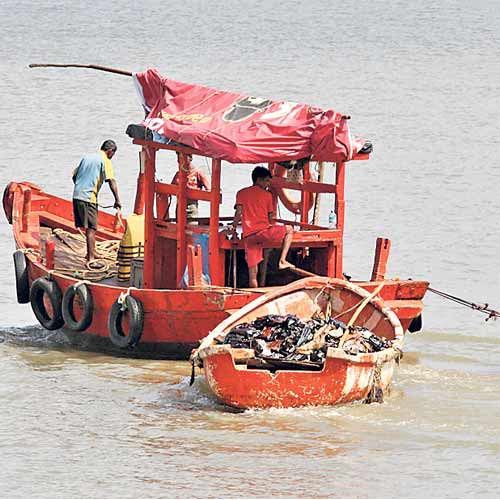
Indonesia kept its assurance to dropped foreign vessels that occupied within their water territory, by sending the three fishing vessels owned by Vietnamese to the lowest part of the Natuna Sea located in the northern part of Indonesia.
The coastal guard of Indonesia bombed the fishing vessels after they were caught operating an illegal fishing close to the area of Anambas island, which meets between Malaysia and Indonesian Borneo near the South China Sea. According to Navy representative Admiral Manahan Simorangkir, eight fishermen were released from their wooden fishing vessels and the gasoline was cleared before they were sunk to prevent water pollution.
Since the new management believes that the office in October will eliminate the illegal fishing within their sea territory for many years, the strategy that Indonesia did was the powerful action. President Joko Widodo guaranteed to drop the fishing vessels of foreign countries that operate illegal fishing in order to save and secure the oceanic resources of Indonesia. This implementation of the president statement gained criticism from the opposition of politics who insist that his plan would give a negative effect to the partnership of neighboring countries.
President Widodo prioritizes the security of marine resources of Indonesia against illegal fishing. He estimates that Indonesia loses almost twenty four billion dollars every year because of these illegal fishing operations. He and other officials suggested purchasing drones to track the boundless shoreline of Indonesia. He estimates that over five thousand fishing vessels are running an illegal fishing within the waters of Indonesia because of limited strict action and coastal guard resources.
J. Hariyanto

Why Public Spaces Matter More Than We Realize

Why Public Spaces Matter More Than We Realize

One social issue that often receives less attention than it deserves is the decline of meaningful public space. Public spaces include parks, libraries, sidewalks, plazas, community centers, and other shared environments where people can exist together without needing to spend money. These places may seem ordinary, but they play an essential role in social life. When public spaces are neglected, communities often become more isolated, unequal, and fragmented.

A healthy society needs places where different kinds of people can encounter one another naturally. In daily life, many environments are divided by age, income, occupation, or social group. Schools separate students from adults. Offices separate workers by profession. Private clubs, expensive cafes, and gated communities often limit who feels welcome. Public spaces are one of the few settings where people from different backgrounds can share the same environment. A park bench, a neighborhood library, or a public square may seem simple, but these places quietly support social connection and civic life.

Public spaces are especially important for people who do not have access to many private resources. A teenager who lives in a small apartment may rely on a library to study peacefully. An older adult who lives alone may depend on a nearby park for fresh air and human contact. Children need safe outdoor places to play and interact. Families may need community centers for programs, sports, or support services. When these spaces are missing, daily life becomes narrower and more stressful, especially for people with fewer economic advantages.

The decline of public space is tied to several modern trends. In some cities, overdevelopment has replaced open areas with commercial buildings and luxury housing. In other places, public spaces still exist but are poorly maintained, unsafe, or difficult to access. At the same time, more social life has moved indoors and online. People increasingly spend time in private spaces, on personal devices, or in places where participation depends on spending money. This can weaken the shared experiences that help communities feel connected.

There is also an important political dimension to public space. Public spaces are where people gather, speak, celebrate, protest, and observe one another as members of the same society. They are not only physical locations but also symbols of who belongs. If a city’s public areas are clean, welcoming, and accessible, they send the message that all residents matter. If they are neglected or designed mainly for surveillance, exclusion, or commercial profit, they send the opposite message.

Young people are especially affected by this issue. In many communities, teenagers are often treated as though they are welcome only in schools, homes, or commercial places. If they gather in public, they may be viewed with suspicion rather than recognized as part of community life. But young people also need places where they can socialize, move freely, and develop a sense of belonging. A society that offers young people no meaningful public space should not be surprised when isolation, boredom, and disconnection increase.

Protecting public space is therefore about more than urban design. It is about social well-being, fairness, and democratic life. Governments and communities should invest in parks, libraries, sidewalks, recreation areas, and other shared places that are safe, well-maintained, and open to everyone. These are not luxuries. They are part of the basic social infrastructure that allows people to live not only near one another, but with one another.

In the end, public spaces remind us that society is shared. They create room for ordinary human connection, and in doing so, they strengthen the fabric of community in ways that are easy to overlook but difficult to replace.

HAODE (YUKI) CHEN

Bring Fun and Fulfillment to your Life by Volunteering

The easiest way to bring fun and fulfillment to your one’s life by volunteering is to consider one’s goals and be clear on it before becoming a part of the community service program. So, it’s always recommended to take out a little time to visualize your goals and interests.

Just start by identifying the reason why you want to volunteer and what you would enjoy the most in volunteering yourself. Volunteer opportunities chosen according to your goals and your interests will always give fun as well as fulfillment to your life.

image004

Volunteering gives a wonderful opportunity to explore your passions and interests. Doing meaningful and interesting volunteering tasks can help in giving you a relaxed and energized escape from the monotonous tasks of the daily routine. Volunteering also offers a sense of renewed creativity and fills you with motivation which positively impacts your personal as well as professional life. It is also a good way to spend time outside with a purpose and enjoying it whole heartedly.

K. Gaa

1 2 3 4 … 11