Public Service Apps Need Better Draft Saving for Long Forms

Public Service Apps Need Better Draft Saving for Long Forms

Government and public-service forms can take twenty or thirty minutes to complete, yet some apps erase everything if the user leaves before submitting.

Many everyday services are designed around the assumption that everything will go as planned. Real life is usually messier.

Apps should save drafts automatically, show when progress was last stored, and let users return without repeating completed sections.

That is why backup procedures matter. Users should not need to negotiate from the beginning every time an ordinary problem appears.

Communication should be specific enough to guide action. Telling someone that an item is unavailable, a request is being processed, or a rule is subject to policy is much less helpful than explaining what happens next.

Staff training is part of the solution as well. Written rules are useful only if employees understand them and apply them consistently.

Draft saving is a basic reliability feature when forms involve documents, dates, addresses, or information people may need time to find.

A well-run organization pays attention to these small points because they determine whether people experience the service as dependable or unnecessarily difficult.

A short review after implementation can show whether the change is working as intended. If the same problem continues, staff should adjust the procedure instead of treating every new complaint as unrelated to the ones that came before.

A short review after implementation can show whether the change is working as intended. If the same problem continues, staff should adjust the procedure instead of treating every new complaint as unrelated to the ones that came before.

A short review after implementation can show whether the change is working as intended. If the same problem continues, staff should adjust the procedure instead of treating every new complaint as unrelated to the ones that came before.

A short review after implementation can show whether the change is working as intended. If the same problem continues, staff should adjust the procedure instead of treating every new complaint as unrelated to the ones that came before.


J. Alvarez

Public Apps Need Better Session-Recovery After Crashes

Public Apps Need Better Session-Recovery After Crashes

A public-service app that crashes near the end of a long form can erase minutes of work and force the user to start again.

The issue may seem minor when it happens once. When the same uncertainty affects many people, however, it becomes a design problem rather than an isolated inconvenience.

Apps should save progress automatically, restore unfinished sessions after a crash, and clearly show what information was preserved.

The procedure should be visible before someone reaches the difficult moment. Instructions buried in a handbook or several layers of a website are far less useful than a short notice placed where the decision actually occurs.

Organizations should also review recurring questions and complaints. Repeated reports often reveal whether the problem comes from unclear communication, limited capacity, outdated equipment, or inconsistent staff responses.

Consistency matters. Two users facing the same situation should not receive completely different answers simply because they spoke to different employees.

Session recovery can make digital services feel dependable even when the software itself fails unexpectedly.

Small operational details shape trust. When rules are understandable and predictable, people can focus on the purpose of the service instead of spending time figuring out how the service itself works.

A short review after implementation can show whether the change is actually helping. If the same problem continues to appear, the organization should be willing to adjust the procedure instead of treating every new report as a separate exception.

A short review after implementation can show whether the change is actually helping. If the same problem continues to appear, the organization should be willing to adjust the procedure instead of treating every new report as a separate exception.

A short review after implementation can show whether the change is actually helping. If the same problem continues to appear, the organization should be willing to adjust the procedure instead of treating every new report as a separate exception.


J. Santos

Schools Need Boundaries for Facial Recognition Tools

Schools Need Boundaries for Facial Recognition Tools

A school tested facial recognition at an entrance to speed attendance and identify unfamiliar visitors. Families learned about the pilot after cameras had already collected images for several weeks. Administrators emphasized convenience, while parents asked who stored the biometric templates and how a student could refuse.

Facial recognition is different from an ordinary identification card. A lost card can be replaced, but a face cannot be issued again after biometric data is exposed. The technology may also produce unequal error rates and can misidentify students whose appearance changes or whose faces are partly covered.

Schools should first demonstrate that the system solves a specific problem that cannot be addressed through less intrusive methods. Faster attendance alone is a weak reason to create a permanent biometric database. Visitor management and door security may have alternatives that collect less sensitive information.

Participation should never be presented as mandatory when a reasonable alternative can be offered. Students who decline should not face slower entry, public attention, or reduced access. Families need clear information about the vendor, storage location, deletion schedule, accuracy testing, and access by police or other agencies.

The system must include a process for challenging errors. A student incorrectly flagged should receive immediate human review rather than being treated as suspicious because software produced a match. Staff need training not to assume that an automated result is objective.

Biometric records should be deleted when a student leaves or when the pilot ends. Contracts must prevent vendors from using school data to improve unrelated commercial products.

Schools have a duty to protect students as well as manage buildings. Technology introduced for safety can create a different form of risk when it normalizes constant identification. Strong boundaries are necessary before a child’s face becomes a credential stored by institutions and companies beyond the family’s control.


C. Halvorsen

E-Bike Battery Safety Information Should Come With Every Sale

E-Bike Battery Safety Information Should Come With Every Sale

A new e-bike owner charged the battery overnight beside the only exit from a small apartment. The instruction booklet included several technical warnings in tiny print but did not explain where the battery should be placed, how heat affects it, or what signs of damage require immediate attention.

Electric bicycles expand mobility and can replace many short car trips. Their batteries store substantial energy, which makes quality, charging equipment, and everyday handling important. Buyers should not need specialist knowledge to understand basic precautions.

Retailers should provide a one-page safety guide in clear language. It should advise customers to use the correct charger, avoid damaged cables, keep the battery away from extreme heat, and stop using a unit that swells, leaks, smells unusual, or becomes excessively hot. Charging should not block an exit or take place on a flammable surface.

Replacement batteries need special attention. Low-cost products may look compatible while lacking reliable cells or protective systems. Sellers should identify approved replacements and explain whether modifying the battery or charger affects the warranty. Online marketplaces should respond quickly to dangerous or falsely certified products.

Apartment buildings and workplaces can support safer use by creating suitable charging areas where practical. Blanket bans may remove a valuable transport option without addressing why residents charge in hallways or crowded rooms. Storage rules should be developed with fire-safety experts and communicated before enforcement.

End-of-life batteries do not belong in ordinary trash. Customers need the location of collection points and instructions for transporting damaged units. Retail take-back programs can make responsible disposal easier.

Battery safety is a shared responsibility among manufacturers, sellers, property managers, and users. Clear information at the time of purchase is one of the simplest protections. It allows people to benefit from electric mobility while recognizing that a battery is not merely an accessory to charge wherever space happens to be available.


C. Okeke

Charging Lockers Need Transparent Safety Rules

Charging Lockers Need Transparent Safety Rules

A shopping center installed lockers where visitors could leave phones charging behind a coded door. The service seemed convenient until one customer returned to find the locker disabled after a heat alarm. Staff did not know whether the phone was damaged, who could open the compartment, or how long the investigation would take.

Charging lockers combine electricity, valuable devices, and enclosed spaces. They can help travelers and customers who need power, but the equipment requires more than a row of cables and a payment screen.

The instructions should identify compatible connectors, maximum charging time, prohibited devices, and the procedure for a swollen or visibly damaged battery. Users need to know whether the locker stops power automatically when heat is detected and whether staff can open a compartment without the original code.

Liability terms should be visible before payment rather than hidden in a long digital agreement. A provider may reasonably limit responsibility for an already damaged device, but it should not avoid responsibility for faulty equipment, insecure access, or poor maintenance.

The system also needs options for people who cannot use a touchscreen or mobile payment. Physical buttons, readable contrast, reachable compartments, and staff assistance make the service more accessible. A receipt should identify the locker and support contact without displaying the access code openly.

Regular inspection is essential because damaged cables and loose ports can create electrical risks. Staff should have a clear emergency procedure and should not improvise around a hot battery.

A charging locker offers temporary custody as well as electricity. People trust the operator with an expensive object that may contain personal information and essential communication tools. Clear safety and retrieval rules turn that trust into an accountable service rather than a convenient machine that becomes confusing at the first sign of trouble.

Operators should publish inspection dates and remove damaged compartments from service immediately rather than leaving users to discover problems after payment. Staff training should include battery incidents, lost access codes, and secure handover when a device must be removed manually.


B. Maseko

Online Service Bots Need a Human Exit

Online Service Bots Need a Human Exit

A customer tried to report that a bank transfer had gone to the wrong account. The website chatbot repeatedly offered articles about changing passwords and checking balances. Each answer was polite, immediate, and irrelevant. The customer finally found a telephone number on an old statement after losing valuable time.

Service bots can answer routine questions at any hour. They can reset simple settings, provide order updates, and reduce waiting for common requests. Problems arise when the system assumes that every issue fits one of its prepared categories.

A human exit should remain visible throughout the conversation. The option may lead to live chat, a callback, a secure message, or an appointment, but it should not appear only after a long sequence of failed answers. Urgent topics involving fraud, safety, health, housing, or service cancellation need especially direct escalation.

The bot should preserve the information already provided. Customers become frustrated when they explain the same situation again after transfer. A short summary can accompany the case, while the person should be able to correct anything the system misunderstood.

Companies need to measure unresolved conversations rather than only the number handled automatically. A bot that ends a session quickly may look efficient even when the customer leaves without a solution. Complaint rates, repeated contacts, and successful escalation provide a more honest picture.

Accessibility and language should also be tested. A system may fail when someone uses a screen reader, writes in short phrases, or describes a problem outside the company’s preferred terminology. Human assistance is part of inclusive design, not evidence that automation has failed completely.

Automation should remove unnecessary waiting, not become a barrier protecting the organization from difficult cases. A clear human exit keeps the convenience of a bot while recognizing that some problems require judgment, responsibility, and a person who can act beyond a scripted menu.


B. Kowalczyk

民众健康意识的觉醒

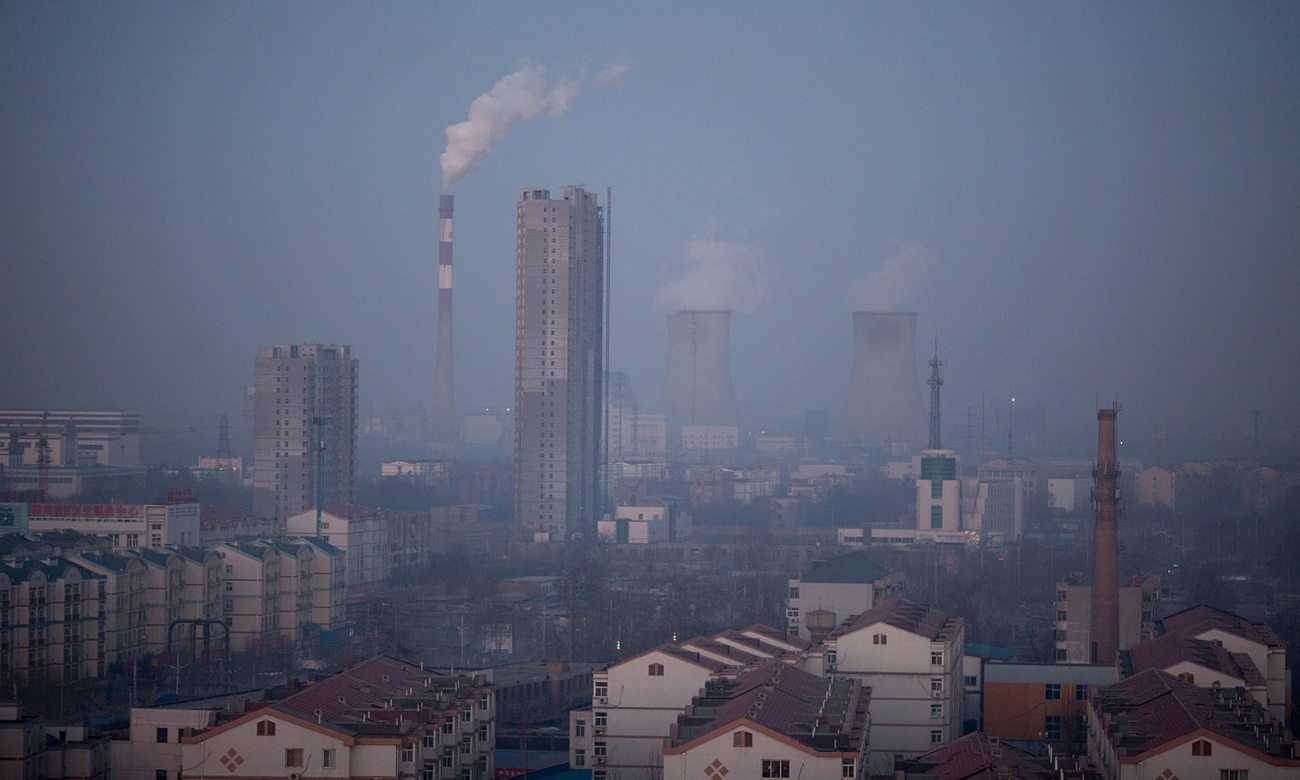
环境污染,是现在威胁全中国人身体健康的最大问题。尤其是近几年,空气污染不断受到大家的关注。“雾霾”“PM2.5”“防霾口罩”等等都成为中国人口头上和各种社交网络上的热议话题。对此,中国政府也对环境治理加大了管理力度,纷纷出台各种一些类法规政令来保护环境。

其实,对于高速发展的中国来说,要保障经济的快速发展,牺牲环境是必不可免的。雾霾不仅仅是最近这几年才有的。几年前,中国普通民众看到雾霾天的时候,官方给出的解释是浓雾,或者部分农民烧秸秆,因此,大家没有把这种雾霾天放在心上。但是,只在这几年,中国百姓才意识到雾霾的严重性,和危害性。笔者认为原因有以下几点:

第一,信息科技的飞速发展,加快了信息的流动。几年前,微博,微信和其他社交媒体的使用远远没有进几年普及。因此,信息的闭塞使大家相信错误的言论。具体来说,10年前,湖北省某地区的民众看到雾霾时,湖北省的某部门站出来解释说这雾霾是由农民燃烧秸秆导致的。在10年前,大家信息流通也不快,既然官方这么解释,湖北的百姓就这么相信了。但是如今,随着社交媒体的应用,信息流动十分迅速。设想如今,湖北某地区的百姓今天看到漫天雾霾,在其他社交媒体也同样看到其他地区的朋友抱怨雾霾时,该百姓还会相信所谓的“农民烧秸秆” 的荒漠理论吗?

第二,相比10年前,中国如今的社会主力军是“70后,80后,90后”,这群人普遍接受过高中以上的教育,也就是说如今,中国的社会主力军都具有较多的知识储备,因此,他们会更有自己的想法,也敢于向质疑所谓的权威。

第三,中国百姓的健康意识也不断提高。众所周知,在过去的几十年里,中国百姓积累了大量财富,如今,普通百姓的温饱都不成问题。而且,对于大多数的百姓来说,他们现在追求的更加高质量,更加健康的生活方式。作为人每时每刻都需要的空气来说,如果不能保证呼吸无毒的空气,又该怎么保障中国普通百姓的身体健康呢?


140be3a9-5b8f-4dc6-846f-b746bb3e1e86-2060x1236

http://www.theguardian.com/cities/2015/may/22/baoding-china-most-polluted-city-air-pollution-beijing-hebei

姬潇依


Know Your Space

Today we are likely to come across many news regarding to space travels, satellites, rovers, rockets, Space missions, space walks, etc. Recently, we heard about Sunita Williams, Akihiko Hoshide, Yurie Malchenko and their space walk. And how they repaired their space station. But actually the age of exploration began in 1957, when powerful rocket engines boosted Russian satellite ‘Sputnik 1’ free from the Earth’s gravity. This was the start of extraordinary series of adventures for mankind which has seen scores of satellites put in space, mans first steps on the moon, live broadcasts from Mars and space probes venturing past the outer planets of the solar system. These probes have not only beamed back the first pictures of new, previously unknown moons but have also provided remarkable insights into the nature of the universe. In early days manned spacecrafts could only be used once, within just a tiny capsule holding the astronauts falling back to the earth at the end of the mission. The US space shuttle was the first spacecraft that could be reused, landing back on the earth like an aeroplane. The rocket boosters that launched it into space are recovered.

Very powerful rockets are needed to push a spacecraft which is cleared from the earths gravity. But once clear, such power is no longer needed. So rockets are made in separate stages, each of which falls away when its fuel is spent. Unmanned space probes guided by computer, have now visited all the planets, but not Pluto which is the smallest and most distant planet. The probes have actually landed on Mars and Venus. Late in 1997, the Mars pathfinder beamed back the live pictures from the surface of Mars. The space probes voyaging to the planets used gravity to help them travel huge distances on very little fuel. As they pass each planet, their gravity pulls them in and hurls them onwards a slight different course like a sling shot. Thus space shuttle is launched with solid fuel booster rockets that fall away, but then recovered. Typical shuttle missions include launching and repairing satellites and performing scientific experiments.

Satellites stay in orbit along their orbital plane is already set. Satellite orbit is 22000 miles (35800km) above the ground, takes exactly 24 hrs- the same time taken by the earth to rotate once. So satellites on this orbit stay in exactly that same place above the earth are known as geostationary satellites.

Satellite that orbits with the Sun is called as sunsynchronus. The orbits precision is due to earth’s oblateness. The inclination of the orbit is measured by the angle formed by the orbital plane of the satellite and the equatorial plane. As the orbital plane will always maintain its position relative to the sun. The satellite will have constant illumination conditions throughout the year, useful for remote sensing operations. If launched in a due east direction, the latitude of launched site will be the inclination of satellites orbit. A sun synchronous orbit is also called retrograde orbit (as it is in the opposite direction to the earth’s rotation). The satellites orbital plane should be inclined away from true north south polar orbit and have an inclination of more than 90°, otherwise the satellite orbital plane would not complete a full rotation. Hence a Sun synchronous orbit cannot be precisely polar (with 90° inclination). But nearly polar, typically around 100°. In fact a sun synchronous orbit is invariably a polar orbit. But converse need not to be true.

In today’s era, aeronautical engineering and space science is an very beloved subject. The dream to become an renowned person in this field is an passion embossed on the minds of tomorrows generation.


Student: Sneha Magar


space

http://www.telegraph.co.uk/travel/destinations/northamerica/usa/10693321/Space-Camp-Alabama-how-to-be-an-astronaut.html

手机-缺点

在过去的10年中,智能手机的普及给中国人生活带来了方方面面的影响。在这些影响之中,有许多好的影响,例如像支付软件的的使用大大便捷了人们的生活,但是与此同时,手机的普及也带来了许多负面的影响。下面以大学生为例,来谈谈其影响:

  • 学生沉溺于网络交流而缺乏面对面沟通交流技巧。当下,中国最流行的社交软件是“微博”“微信”。通过这2款社交软件,大学生可以很轻松的和自己的同学甚至陌生人取得联系。大家似乎已经习惯了躲在手机后面的聊天模式,这手机上聊天应用很自如,但是,对很多人来说,在和友人面对面相处时却不知道改如何聊天。以至于,很多聚会时,大家低头玩自己的手机,或者即使大家距离很近,也会选择使用手机聊天软件来沟通。
  • 社交圈成秀场,对大学生,甚至对整个社会的风气产生负面影响。在各种社交圈,总是可以看到各种秀奢饰品,秀长相,秀恩爱的所谓网络红人。这些人的言论和奢华的私人生活会对大学生的价值观造成消极影响,十分容易导致大学生,或者整个社会的盲目拜金心里。
  • 信息安全威胁加剧。在APP广泛运用的同时,手机用户的信息安全也遭受重大威胁。近几年,电信诈骗越来越多,而且涉案金额也越来越大。


9-in-10-Chinese-People-Now-Owns-a-Smartphone-as-the-Market-Becomes-Oversaturated-WSJ

http://news.softpedia.com/news/9-in-10-Chinese-People-Now-Owns-a-Smartphone-as-the-Market-Becomes-Oversaturated-WSJ-480807.shtml


App Updates Should Explain What Actually Changed

App Updates Should Explain What Actually Changed

A phone displayed an update notice for a banking app with the description “bug fixes and improvements.” After installing it, the customer discovered that the layout had changed, an older budgeting feature had disappeared, and a new permission request appeared during login. None of those changes had been mentioned before installation.

Software updates are necessary for security and reliability, but vague release notes make informed use difficult. People may depend on an app for work, accessibility, health, payments, or communication. A major change can disrupt routines even when the developer considers it an improvement.

Release notes should identify the functions that changed in ordinary language. Security repairs can be described without publishing instructions that help attackers. Developers should state whether an update changes permissions, account requirements, supported devices, subscription terms, or the location of important controls.

Accessibility changes deserve particular care. Removing a keyboard shortcut, altering contrast, or changing screen-reader labels may affect users who cannot easily adapt. Testing should happen before release, and known accessibility problems should be disclosed with an expected repair date.

App stores can improve standards by rejecting notes that contain only generic phrases. A short structured form could ask developers to list added features, removed features, privacy changes, compatibility changes, and important fixes. Small maintenance updates would still require only a few sentences.

Users should also be able to review previous notes after updating. This helps when a problem appears later and someone needs to understand which version introduced it.

An update is a change to a product people already use, not a new purchase made with no history. Clear notes respect that relationship. They allow users and organizations to prepare, delay a nonessential update, or seek support instead of discovering important differences only after the software has changed.

Organizations that manage many devices also need machine-readable notes so administrators can identify changes before approving a broad deployment. A standard format would reduce uncertainty for schools, businesses, and public agencies that cannot test every update immediately.


A. Quintero

1 2 3