The Security Systems division in India

The Security Systems division in India
Bosch Security Systems is a provider of high quality communication products and services around the world, featuring new methods to the customers. It is one of the leading competitors in the business around the globe and in Indian market. Providing better than everything of the same type, Bosch Security Systems offers a complete system of modern technologies for ordinary and modified applications. The Security Systems has a record of five thousand four hundred employees in more than forty countries.
Bosch’s innovative IP and Analogue based CCTV Surveillance System and Access Control belongs to the security portfolio whereas for protection they have fire alarm and invasion systems. Moreover, public address, conference and analytical communication systems and professional audio systems are very important structure in communication of Bosch Security.
Bosch Security Systems has newest demo cum training institute at Bengaluru. This institute targets to show the highest standard of industrialist training and to enhance product knowledge and expertise.
I.Bhakta

More Than a Setting: Why Digital Privacy is a Human Right

More Than a Setting: Why Digital Privacy is a Human Right

When we hear the phrase “digital privacy,” we often picture complex encryption, scrolling through endless legal disclaimers, or a cybersecurity expert in a dark room. But in our modern world, privacy is far more than a technical hurdle; it is a deeply human social issue that touches the core of how we live. It is about the quiet dignity of being able to move through the world—searching for answers, talking to friends, or exploring new ideas—without feeling like a hidden audience is constantly scoring and measuring our every move. In an age where our daily lives have migrated online, protecting our data is no longer just about hiding secrets; it’s about protecting our fundamental freedom to grow without being “nudged” by an algorithm.

The challenge of modern life is that we are constantly generating a trail of digital footprints, often without a choice. Our phones track our movements, our apps monitor our habits, and our browsers record our deepest curiosities. We often “consent” to this tracking not because we truly want to, but because it is nearly impossible to participate in modern society—to find a job, go to school, or stay in touch with family—without clicking “Agree.” This creates a lopsided power dynamic where we are highly visible to massive, invisible institutions that know our preferences better than we might know them ourselves. When our data is used to predict our behavior or manipulate our attention, we lose a little bit of our autonomy to systems we can’t even see.

This environment is particularly taxing for young people, who are building their identities in a digital fishbowl. For a teenager, a post or a “like” might feel like a temporary expression of a passing mood, but for a data broker, it is a permanent piece of a profitable profile. There is a painful gap between the casual, human way we use the internet and the cold, permanent way platforms harvest our information. We shouldn’t have to choose between being connected and being private. Protecting digital privacy means ensuring that the next generation has the space to make mistakes, change their minds, and define who they are without a digital shadow following them for the rest of their lives.

Ultimately, privacy is not about having something to hide; it is about having something to protect. It is the foundation of a free and open society. If we want a future where technology serves us rather than the other way around, we need to treat data ethics as a social responsibility. This means pushing for laws that put people before profits and cultivating a culture that values human agency. We must move toward a world where we can enjoy the incredible benefits of being connected without sacrificing the basic human need to simply be left alone.

HAODE (YUKI) CHEN

Announcing this year’s Exploration Research Symposium

Announcing this year’s Exploration Research Symposium.

The purpose of this Exploration Research Symposium is to encourage student research, so we hope you will participate in this year’s competition.

You are free to choose your own research topic, and there is no limit on the format and length of the submission. We accept papers or abstracts.

Please include your name and email address and submit your entries to admin@explorationjournal.org.

The deadline is May 1, and we will announce the finalists by June 1.

Pop Tech! – Seeing is believing!

Technology has advanced much through the ages and adapted loads to the current trends. With new inventions constantly being produced to satisfy the fickle tastes of the public, something as fundamental as vision has thus been revolutionised as well. Here are some examples of how innovation has changed the way we see things:

Instagram sunglasses:

With the rise of filter usage for photo sharing on social media, this new invention known as the Instagram sunglasses are basically a pair of shades that are marketed on providing real-life filters, like the Valencia effect on Instagram. Though it has been criticised for being just a pair of boring brown tinted glasses, its popularity can easily be seen from the way it was about to reach over 1,000% of its pre-planned crowd source funding!

Night vision contact lenses:

How these contact lenses work is via Graphene – a type of carbon that reacts to photons, that is placed within the lens. As such, dark images brighten up instantly, especially in low light areas. This makes the night vision contact lenses a perfect item to use by party-goers having a late night out. Why? You can easily gauge the attractiveness of others in the clubs under the low light too! The result? No more ugly hook ups!

Virtual Omni:

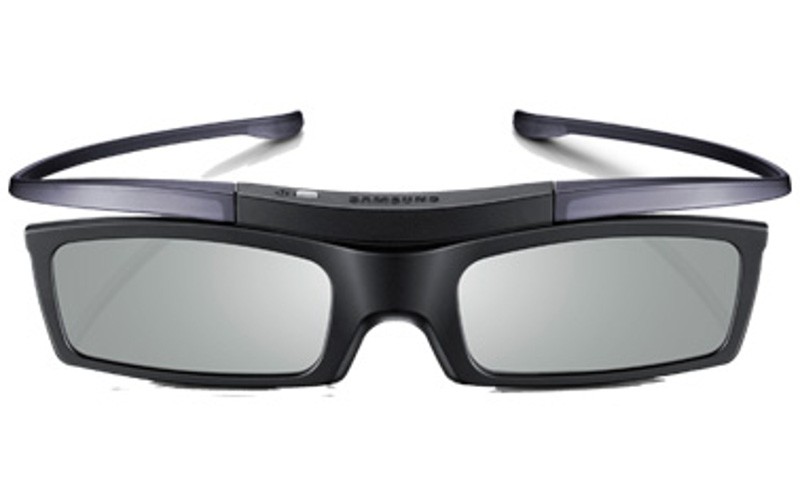
From the virtual shot function of the Galaxy S6, to Samsung 3D glasses, virtual reality systems are coming into play and in trend these days. The Virtual Omni is a system that has remodelled the idea of screens everywhere. With the aid of Oculus Rift and Sixense STEM, a system that tracks body movement, people can now be fully submerged into a separate world. Imagine being able to follow the wanderlust trend of touring the world in full panoramic view – all without the need to suffer agonizing crowds or long distance travel. The system has also successfully impinged upon the gaming industry and this gives a whole new meaning to first person shooter games. If you recall those moments where you merely relied on your fingers to press the keys so your characters could duck in when they encounter danger, well those reflexes would now have to include your whole body too!


Student: Hidir Koh

3d

Urbanization in China

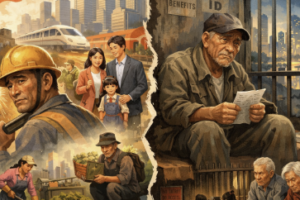
China has always boasted that the basic labor forces are the most respected and greatest people in the society, which was actually favored and supported from around the 1960s to the 1980s. Yet, as the society becomes globalized and modernized, the so called greatest labor forces are at the risk of being put aside by the society and paid much less attention than other work forces. They usually make the most efforts physically to build the society but enjoy relatively basic or even poor levels of social welfare and financial income as a whole.

Migrate workers, for instance, are among the most representative in this growing trend. They spend more than a third of their life making contributions to the community by experiencing working in different fields and industries, ending up being not eligible to reside legally in these crowded metropolis. Getting an official identity in these big cities has become so important while so difficult that they have been categorized by the local people as customary simple visitors to the cities that are vaguely focused on. Without legal identity to live in the big cities, even if they have helped urbanize the cities to the largest extent, they have to face immense troubles in their daily life, posing significant threats to their own quality of life and the future of their offspring.

Having reached the retirement age, these migrate workers can only rely on their pension to survive if they didn’t manage to accumulate enough wealth in the earlier stages of their life. For the luckiest groups of people, they choose to live in the suburbs of the cities or even in cities around to live peacefully and relatively without financial constraints and concerns for the rest of their life. Nevertheless, things do not turn out this way for the majority of these disadvantaged groups of people. To be specific, they face the problem of not enjoying legal medical coverage over their physical problems as they age since they are not legal residents in the cities. Their future generations don’t have access to tertiary education as those of local people even if they have worked hard enough to build the cities for their life.

In conclusion, while it has to be admitted that admissions and tickets available for people to be legal residents to live in big cities are limited and cannot be granted to each individual, local authorities should try to find a balance to help these people get the most out of their contributions, ensuring a sustainable and fair social system.

Ziluo Cheng

Case International Relations Through International Trade

International trade allows countries to expand their markets and access goods and services that otherwise may not have been available domestically. As a result of international trade, the market is more competitive. This ultimately results in more competitive pricing and brings a cheaper product home to the consumer. International trade is the exchange of goods and services between countries. Trading globally gives consumers and countries the opportunity to be exposed to goods and services not available in their own countries, or more expensive domestically. This not only avoids the inflated prices of some companies, but also makes companies in the world competitive, thereby promoting the development of the world. Although many people think that this is unfavorable for some small countries, the survival law of this world itself It is not easy, competition is the fastest way to promote the development of social science and technology. The existence of some patents also better protects the safety of major enterprise products. After all, international trade is about transparency and openness, so that not only some state officials cannot obtain illegal benefits from it, but also ensures the survival of some small and medium-sized enterprises with strong innovation. And some technologies are also used as diplomatic means by major countries, and in order to maintain their advantages in this field, there will always be a sense of crisis, which is also a major condition for social progress. Each country has its own advantages and maintains the balance of all countries in the world.

JUNFU (DAMON) HUANG

Vietnam may decriminalize drug use

Vietnam may decriminalize drug use

The National Assembly of Vietnam is taking everything into account to cease by legislation to treat drug use as illegal, lowering the private use of illegal drugs from a lawbreaker to an executive offense. The chairwoman of the assembly’s Committee on Social Affairs, Thi Mai mentioned her council had suggested discarding Article 199 of the Criminal Code which promotes two-year-imprisonment of for those who found guilty of illegal drugs. The use of illegal drugs would still be a serious illegal act, subject to death penalty.

image008

Vietnam conveys illegal drug dependency through obligatory drug detoxification institutions, where drug addicts are confined for about two years and five years when it comes to few institutions. The officers in local government keep their list of those drug addicts in their regions and deliver cases to the detoxification institutions at their preference.

The government promotes support groups in the community for previous drug dependents; however, it is only available in Hanoi.

Heroin drugs are the very well-known recreational drug in Vietnam which causes the country to spread HIV because of the shared syringes.

When it comes to prohibiting the illegal drugs in the market, Vietnam has firm laws against it. During the year 2007, eighty five people were convicted a death penalty because of illegal drugs and additional nine illegal drug addicts for the following year.

Mai who is the officer of National Assembly said that the program to failed to completely remove illegal drug operations.

T.P. Nguyen

Health Implications of Dirty Drinking Water

The human body contains 70% water, which is present within every single cell in the body. Water is an essential building block for all organisms. However, not everybody is fortunate enough to have access to clean water. Children in developing countries die due to either lack of access to water or drinking contaminated water. According to UNICEF, 760,000 children died in 2011 along from consuming contaminated water. And according to the World Health Organization and UNICEF, 768 million people live on unimproved water, a type of water containing high levels of pathogens and thus unsafe for drinking.

Risk factors in normal childhood include poor water, sanitation, and hygiene. A major health implication of drinking dirty water is contracting diarrheal diseases such as cholera and environmental enteropathy. Both chronic diarrhea and enteropathy cause stunted growth, both physical and mental, due to poor nutrition absorption, and therefore they are detrimental to young children. Environmental enteropathy leads to chronic anemia and growth failure in children. Therefore, children not just experience stunted growth and diarrhea but also face iron deficiency. Further, children drinking contaminated water are exposed to roundworm, hookworm, lymphatic filariasis, Hepatitis A, B, E and F, jaundice, and typhoid, some of which are lethal to children.

Some key solutions to this urgent problem include piped water, privatized water supply, and in-house water treatment, but these are difficult to achieve in developing countries, the countries that need such solutions the most. In this regard, there is an urgent need to come with cheap but effective solutions to keep children away from dirty drinking water.

Y.S. Hong

Interesting Info on Anabolic Steroid Legality in Japan

Interesting Info on Anabolic Steroid Legality in Japan
Japan carries a strict attitude when it comes to eliminating almost every substance on the US scheduled list of drugs. But not with anabolic steroids.
In Japan, private ownership and use of anabolic steroids is permitted by law. But the use of anabolic steroids is illegal in the regulations of many sports during Olympics. There was never been a case of Japanese athlete being caught in Olympics using prohibited drugs. Therefore, it is believed that the rate of steroid use in Japan is lower compared to other countries.
Since the ownership of steroids is authorized by law, there are users of steroids who purchase online. Data about comprehensive medicinal figures and steroid series are also available on the internet but the accuracy of these contents cannot certainly provide a formal assurance.
You can bring into Japan the AAS available for a two-month-supply. The catch is that you are not allowed to bring medical syringes but if you can find them in local areas, you are not restrained to stick away.
J. Tanaka

Impact of Twitter

Take a sip of tea, sit relaxed on chair and think for a while how far Twitter has come since its release. It is difficult to conclude your impressions in a single day without referencing internet, TV or radio stations.

If you wanted to find some old friends through internet then search on “FACEBOOK”

If you want to search any information on any of the keywords then “GOOGLE” it

If you wanted to share your random thoughts with the world or you wanted to deliver some interesting news to the world then “TWEET” it.

image001

This social networking site has more than one million active users today. You would be shocked to know that almost half of them logging in everyday. Twitter has changed the way how news can be delivered or shared with the people.

We are not saying that Twitter is the only social networking Company across the world but it has certainly reached a level that cannot be attained by everyone.

1 2 3 4 10