
RCT AI for Game Industry

RCT AI is a team focusing on developing AI solutions for game industries. According to the official website, the solutions is based on an algorithm called “Chaos Box”. Based on the engine developed on this algorithm, in-game NPCs’ behaviors and scripts can be generated real-time instead of manually input into the program, which provides NPCs the ability to appropriately respond to human players’ actions in the real-time. In the early demo showcase videos posted on Bilibili by RCT AI team, a scenario of bank robbery is created. All NPCs appear in the scenarios are programmed with AI engine with “Chaos Box”. NPCs are all appropriately respond to human player’s different actions on a single plot without any scripts input. The scenarios go on fluently without any errors happen on NPCs and end up differently based on different moves by human players. Apparently, by applying this AI engine into the video game programs, all the games include NPCs or bots are going to be changed. One benefits for video game players is they won’t need to tolerate NPCs acting weird. That means the gaming experience is not going to be destroyed by error in the algorithm and the immersion of video games will go to a higher level. However, a concerning problem for a real AI system like this is about the self-learning of AI. The AI will be trained in excessive amount of experience being human players’ opponent. It is very possible and assured that some day in the future after AI engine is applied into the game, the NPCs in-game will be trained into an extremely difficult opponent for human players to defeat and totally ruin the game experience. A system of restricting AI learning process should be applied in order to protect video game player’s gaming experience.
https://rct.ai/en-us/
https://rct.ai/en-us/chaos-box
https://www.bilibili.com/video/BV1dg411V7Wf?spm_id_from=333.999.0.0

Tianze Xu
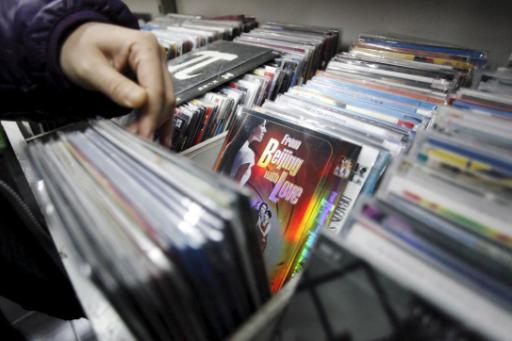
Music piracy in Japan: a growing problem?

Music piracy in Japan: a growing problem?

We are all aware that music piracy is global problem today, but not the same as another in different countries and regions. Japan is also experiencing a problem about music piracy. It is roughly calculated that there were nearly four hundred million pirated music files that were downloaded and additional seventy million compared to the number of the legal downloads, which lead in telecom and music industry in Japan to enforce “a system to automatically check cell phone Web sites for illegal music files, in order to prevent the files from being uploaded or downloaded in breach of copyright law.”

The Japanese have come up with new methods to observe and check the progress of the users’ use of technology, without a doubt was enhanced by the fact that it is a leading country in technological progress. Probably, it has also become fully aware that taking legal action in opposition to users will lead in a strong and adverse reaction that can possibly paralyze the industry, something foreign companies are only beginning to understand.

After all, the most important thing is the recognition and enjoyment of music. While fans are searching for novel ways to achieve their chosen tunes illegally, musicians and record labels should still be delighted that there are music lovers and be grateful that there are still supporters who are ready to support them through buying their albums. The Japanese have a plan  that can possibly prevent illegal downloads from happening, and that obviously, is always an asset.

image002

Baidu’s Verne Plan

Baidu’s Verne Plan

Many have read the book Twenty Thousand Leagues Under the Sea, whose author, Jules Verne, is considered by many to be the father of science fiction. His imagination has motivated many to invent things once thought not possible, and Baidu, the largest internet company in China, has decided to follow in his footsteps by setting a “crazy” plan named after Verne called the “Verne Plan.”

So what is the Verne Plan?

The Verne Plan is designed to connect to science fiction to existing technologies for real innovations for the next century. Its main focus is on artificial intelligence, such as AlphaGo, the genetic programming designed to help people discover the secrets of life.

So who are involved and when will it start?

The Verne Plan has started on April 1, 2016. For this, six famous people have been recruited as founding members: Andrew Ng, a computer science professor of Stanford University and Baidu’s first scientist, will lead the group. Cixin Liu, the author of the famous novel The Three-Body Problem, is a member. Dr. David Brin, a space Scientist and a consultant at NASA, is another. Qiufan Chen, a science writer known as the “Chinese William Gibson,” is the fourth member. The fifth is Haijun Yao, an advocate for popular science and an editor of a sci-fi magazine. Finally, Ken Liu, who translated The Three-Body Problem, enters this imaginative plan. A close look at these six individuals reveals that two are scientists while the others, science fiction writers. It seems like the ideal team!

Why is in store for the Verne Plan?

The Verne Plan changes the traditional idea that science is difficult, cold, and boring into one that is exciting and imaginable, such as the creative ideas highlighted in films like the Iron Man.

Under the Verne Plan, science fiction writers and scientists can expand and merge the boundaries of science and science fiction through creative cooperation. For example, when a new technology requires large-scale application, science fiction writers can be involved in early stages for their vision for more imaginative innovations. This is different from conventional innovation processes in that innovations are achieved through close cooperation between scientists and science fiction writers from the very beginning of the development process. One outcome of such cooperation is that innovations are expected to better address the needs and wants of end users.

In the near future, the Verne Plan may succeed in bring to people innovations that can truly change their lives forever. As in the case of electricity and TV, it is certainly exiting to imagine what can come from this creative cooperation between these individuals under an ambitious plan led by one of the tech giants of the world. Stay tuned!

Chenshun Hong

Water –A precious gift for life

Introduction


Water (H2O) is called the precursor of life forms on planet Earth. Our planet Earth contains 3/4th part as water out of which 3% is available for our day to day life. The incessant population growth has created a tremendous pressure on fresh water reserve and it is being said that if we will not use this tiny resource wisely, the existence of life on blue planet will be at verge of extinction. Thus it is imperative for us to conserve it and use judiciously in our day to day life.


Tips to save water


  •  The taps should be turned off after use.
  •  Take bath by filling water in tub/ bucket instead of shower or running tap.
  •  Prefer watering the plants with water already used in kitchen.
  •  Use cistern in toilets with lesser capacity.
  •  Floods should be controlled by constructing dams and reservoirs.
  •  Recycling of water from factories and sewages should be preferred before its disposal.
  •  Water harvesting should be encouraged.
  •  More trees should be grown to increase the level of underground water.
  •  Better methods of irrigation like drip irrigation should be
  •  People should be educated about the utility of water.
  •  We should control the excessive use of pesticides and chemical to avoid water pollution.
  •  Use chemicals like ozone to destroy harmful micro organisms in water.
  •  Filtration of drinking water should be encouraged.
  •  House hold wastes should not be thrown into open drains, rivers, lakes, ponds, seas etc.
  •  Avoid cleaning of utensils and other works near the source of water.
  •  The government should launch plans for purification of water in rivers, lakes and ponds.
  •  The use of synthetic detergents should be discouraged.
  •  Prefer water saver taps.


Let us resolve today to use this tips and conserve water for future. Thus help the incoming generation to live on this beautiful planet.


Student: Hitesh P Sahani & Bhavik H Patel

water


http://www.cleanwateraction.org/ca/program_initiative

1 8 9 10