
Climate Migration: When Home Becomes Unsafe
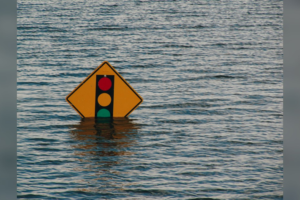
Most people think of climate change as a problem of temperature, storms, or sea levels. But one of its most human consequences is movement. When floods destroy homes, droughts damage crops, or rising seas threaten coastal villages, people do not just lose property. They may lose the possibility of staying where their families have lived for generations.
Climate migration is difficult to discuss because it does not fit neatly into existing categories. A person fleeing war may be recognized as a refugee. A person moving for work may be called an economic migrant. But what do we call a family that leaves because their island is slowly disappearing, their farm no longer produces food, or typhoons have made rebuilding impossible? Their movement may be forced, but the law does not always treat it that way.
For students, this issue can seem distant until we connect it to familiar places. Coastal cities, fishing communities, farming regions, and island nations are all vulnerable in different ways. Climate migration is not only about dramatic disasters. It can also happen slowly, as families realize that staying means fewer jobs, poorer health, and greater danger every year.
The unfairness is obvious. The communities most affected by climate displacement are often not the ones most responsible for global emissions. Many have contributed very little to the crisis but face some of the harshest consequences. This makes climate migration not only an environmental issue, but also an ethical and political one.
Solutions must go beyond emergency aid. Governments need better urban planning, safer housing, disaster preparation, and legal pathways for people who must move. Wealthier countries and companies also need to take responsibility for the damage connected to their development choices. On a smaller scale, schools and communities can help by treating climate change as a human issue, not only a science topic.
The word “home” carries memory, identity, language, and belonging. When climate change forces people to leave home, the loss cannot be measured only in money. It asks a hard question of our generation: will we wait until millions are displaced, or will we build systems that protect people before movement becomes their only option?