
Urbanization in China
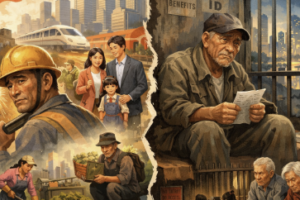
China has always boasted that the basic labor forces are the most respected and greatest people in the society, which was actually favored and supported from around the 1960s to the 1980s. Yet, as the society becomes globalized and modernized, the so called greatest labor forces are at the risk of being put aside by the society and paid much less attention than other work forces. They usually make the most efforts physically to build the society but enjoy relatively basic or even poor levels of social welfare and financial income as a whole.
Migrate workers, for instance, are among the most representative in this growing trend. They spend more than a third of their life making contributions to the community by experiencing working in different fields and industries, ending up being not eligible to reside legally in these crowded metropolis. Getting an official identity in these big cities has become so important while so difficult that they have been categorized by the local people as customary simple visitors to the cities that are vaguely focused on. Without legal identity to live in the big cities, even if they have helped urbanize the cities to the largest extent, they have to face immense troubles in their daily life, posing significant threats to their own quality of life and the future of their offspring.
Having reached the retirement age, these migrate workers can only rely on their pension to survive if they didn’t manage to accumulate enough wealth in the earlier stages of their life. For the luckiest groups of people, they choose to live in the suburbs of the cities or even in cities around to live peacefully and relatively without financial constraints and concerns for the rest of their life. Nevertheless, things do not turn out this way for the majority of these disadvantaged groups of people. To be specific, they face the problem of not enjoying legal medical coverage over their physical problems as they age since they are not legal residents in the cities. Their future generations don’t have access to tertiary education as those of local people even if they have worked hard enough to build the cities for their life.
In conclusion, while it has to be admitted that admissions and tickets available for people to be legal residents to live in big cities are limited and cannot be granted to each individual, local authorities should try to find a balance to help these people get the most out of their contributions, ensuring a sustainable and fair social system.
Ziluo Cheng